Queer Places:
Westminster School, 17A Dean's Yard, London SW1P 3PB, United Kingdom
University of Cambridge, 4 Mill Ln, Cambridge CB2 1RZ
St Andrew Churchyard, Enfield Vicarage, 36 Silver St, Enfield EN1 3EG, United Kingdom
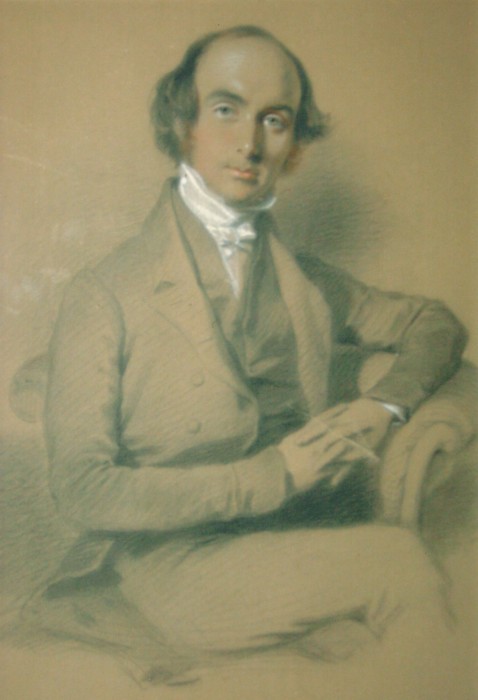 John Moore Heath (December 27, 1808 – February 2, 1882) was born in Chancery Lane, London, on December 27, 1808, the eldest son of George Heath, a prominent Serjeant-at-Law,
and Ann Raymond Heath (née Dunbar). Named after his godfather, General Sir John Moore, K.B., he grew up embedded in a distinguished and intellectually accomplished family.
He was the eldest among several siblings, including brothers Douglas Denon Heath and
Dunbar Isidore Heath—both of whom, like John, became noted
Cambridge Apostles—as well as Admiral Sir Leopold George Heath.
John Moore Heath (December 27, 1808 – February 2, 1882) was born in Chancery Lane, London, on December 27, 1808, the eldest son of George Heath, a prominent Serjeant-at-Law,
and Ann Raymond Heath (née Dunbar). Named after his godfather, General Sir John Moore, K.B., he grew up embedded in a distinguished and intellectually accomplished family.
He was the eldest among several siblings, including brothers Douglas Denon Heath and
Dunbar Isidore Heath—both of whom, like John, became noted
Cambridge Apostles—as well as Admiral Sir Leopold George Heath.
He received his early education at Westminster School, where he became a King's Scholar in 1822. Continuing his academic path to Trinity College, Cambridge, he entered as
a pensioner in June 1826 and was elected a Scholar in 1827. Demonstrating formidable intellectual capability, he graduated in 1830 as the 27th Wrangler in mathematics and
secured a second class in the Classical Tripos. Following his graduation, he was elected a Fellow of Trinity College in 1831. Though initially admitted to the Inner Temple
in January 1825 and called to the Bar in February 1830, a family affliction of progressive deafness significantly impeded his legal progress, prompting his return to
academic life at Cambridge upon the invitation of his former tutor, Dr. George Peacock.
At Trinity, Heath served as an Assistant Tutor from 1833 to 1839 and subsequently as a Tutor from 1839 to 1844, overseeing approximately 150 undergraduates on his side of
the college. During his time at Cambridge, he was an active member of the elite intellectual discussion society, the Cambridge Apostles, and maintained close intellectual
and personal circles that included Alfred Tennyson, Joseph Williams Blakesley,
William Hepworth Thompson, and James David Forbes. He also took holy orders, being ordained a deacon in Rochester
(with letters dismissory from Ely) in February 1836 and a priest by the Bishop of Ely in May 1838.
In 1844, Heath left Cambridge to accept the college living of Enfield, serving as Vicar until his resignation in 1870. His tenure at Enfield coincided with the height of
the Oxford Movement. Although he considered himself a moderate High Churchman in both views and ritual, his introduction of parish developments drew fierce opposition from
local traditionalists who denounced him as a Puseyite. These ecclesiastical tensions led to considerable local turmoil, including turbulent vestry meetings, legal
proceedings, and an infamous incident where he was burned in effigy—an action later deeply regretted by the local squire who had countenanced it.
On December 31, 1845, Heath married Marianne Harman, the only daughter of Edward Harman of Claysmore, Enfield, a prominent Russia merchant and Governor of the Bank of
England whose firm unfortunately suffered bankruptcy the following year. John and Marianne raised a large family, including children George, Julia, Mary Anne, and Walter,
alongside several children who died young.
In 1857, Heath acquired Milland House near Liphook in Hampshire (historically associated with Sussex), a remote 16th-century estate originally built by Peter Bettesworth
in 1584. Initially using the property as a summer retreat while maintaining his duties in Enfield, he permanently relocated to Milland in 1865 after appointing the future
Archbishop of York, William Dalrymple Maclagan, as his curate in charge. At Milland, Heath led the life of a dedicated scholar and country gentleman, pursuing scientific
interests such as maintaining an observatory, compiling meticulous barometric tables, and recording rainfall series over many years. He also enjoyed continental travel,
visiting Rome and Naples with companions such as J.C. Moore, and engaged extensively in architectural alterations to his estate.
Despite his intellectual pursuits, the latter decades of his life were marked by severe financial and personal trials. Around 1869, he became heavily invested in an
unfortunate mining enterprise, the Servian Copper and Iron Co., which swallowed up the bulk of his estate. This disaster was compounded in 1879 when the printing firm
Perkins, Bacon & Co., in which he and his brothers held major shares, lost the lucrative British postage stamp contract. These combined financial catastrophes forced the
liquidation of Milland House, alongside his fine collection of early Flemish and Dutch paintings and a library exceeding 2,000 volumes.
Heath subsequently retired to Westbrook in Godalming, Surrey, where he spent his final years enduring severe suffering from rheumatic gout with remarkable fortitude. He
passed away on February 2, 1882, and was buried in Enfield churchyard, where a muffled peal was rung to mark the passing of Enfield's former vicar. His wife Marianne
survived him until April 1888.
Regarding potential LGBTQ+ connections, John Moore Heath's primary biographical framework does not document explicit romantic or sexual relationships outside of his
marriage to Marianne Harman, with whom he fathered multiple children. However, his life intersected significantly with circles known for homoerotic romanticism, homosocial
intensity, and same-sex emotional bonds characteristic of 19th-century elite British intellectual life.
As a member of the Cambridge Apostles—an exclusive and secretive intellectual secret society founded in the early 19th century—Heath belonged to a homosocial fraternity
celebrated for fostering profoundly intense, emotionally intimate, and romanticized bonds among its members. The Apostles frequently engaged in deep philosophical and
personal disclosures where profound male friendship often blurred the lines between platonic comradeship and romantic devotion. While direct documentation confirming overt
same-sex romantic liaisons for John Moore Heath himself does not explicitly appear in surviving family chronicles like George Heath's Records of the Heath Family, his
intimate associations within the Apostles and his close friendships with literary figures like Alfred Tennyson place him firmly within the historical milieu that nourished
Victorian homosocial and homoerotic culture.
References:
Other references:
- Records of the Heath Family by George Heath (1913) — The primary family chronicle providing biographical text, letters, and contextual notes regarding John Moore Heath's life, career, and properties.
- Alumni Cantabrigienses: A Biographical List of All Known Students, Graduates and Holders of Office at the University of Cambridge by John Venn and J.A. Venn — Records his admission to Trinity College, scholarship details, degrees, and fellowship/tutorship timeline.
- Admissions to Trinity College, Cambridge — Detailed collegiate records documenting his tenure as Assistant Tutor and Tutor.
- Record of Old Westminsters — Biographical data covering his years and progression as a King's Scholar at Westminster School.
- Inns of Court Records / Inner Temple Admission Registers — Documentation of his legal training, admission date, and call to the Bar.
- Crockford's Clerical Directory — Records concerning his holy orders and ecclesiastical appointments.
- The Guardian (issue of February 8, 1882) — Contemporary obituary and notice covering his death and career.
Support this project
This website is a passion project researched, developed, and funded entirely by me. If you find the content valuable and would like to help support the ongoing research and hosting costs, any contribution is deeply appreciated.
Thank you for keeping this independent resource alive!
My books on Amazon: Elisa Rolle's books
BACK TO HOME PAGE
